
 By
By 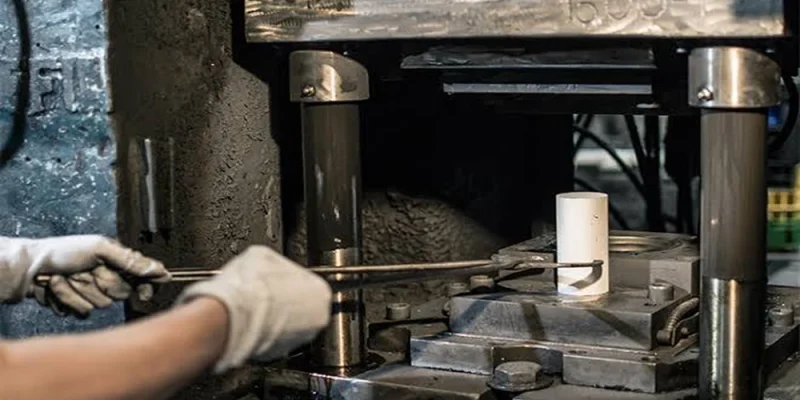
Forged metal components are specified in engineering applications where the combination of superior mechanical properties, structural integrity, and dimensional consistency matters more than the cost savings that cast or machined-from-bar alternatives might offer. The forging process refines grain structure, eliminates internal porosity, and aligns the material’s flow lines with the component’s stress directions in a way that no other forming process replicates, producing parts whose fatigue strength, impact resistance, and reliability under load are measurably superior to equivalent cast or machined components. For manufacturers and procurement engineers sourcing from a metal forging manufacturer in the USA, understanding the process types, the material options, and what distinguishes quality aluminum forging manufacturers and steel forging manufacturers helps narrow a broad supplier landscape to the right partner.
What is the metal forging process?
Metal forging is a manufacturing process in which metal is shaped through the application of compressive force, typically from a press or hammer, applied to a heated or cold workpiece in a shaped die. A metal forging manufacturer uses this compressive force to deform the material to fill the die cavity and simultaneously work the grain structure, producing the refined grain and flow line alignment that gives forged components their characteristic mechanical properties.
The principal forging process categories include:
- Open-die forging: the workpiece is deformed between flat or simple contoured dies without a closed die cavity enclosing the material. Open-die forging is used for large components and custom shapes where the component geometry does not justify the cost of a closed die, and for the initial breakdown forging of ingots and billets before closed-die operations
- Closed-die (impression-die) forging: the workpiece is shaped within a die cavity that precisely defines the component geometry. Closed-die forging produces near-net-shape components with tighter dimensional control than open-die operations, and is the standard process for production volumes of aerospace, automotive, and industrial components where consistent geometry is required across the production run
- Cold forging: forging performed at or near room temperature, typically for smaller components in ductile materials. Cold forging produces excellent surface finish, tight dimensional tolerances, and high strength through work hardening, and avoids the scaling and decarburisation that hot forging of steel produces
What are the advantages of aluminum forging over casting?
Aluminum forging is specified over aluminum casting in applications where the strength-to-weight ratio, fatigue life, and structural reliability of the component are critical. The key advantages of aluminum forging manufacturers’ products over cast aluminum alternatives include:
- Superior mechanical properties: forged aluminum achieves higher tensile strength, yield strength, and fatigue strength than equivalent cast aluminum alloys, because the forging process refines the grain structure and eliminates the porosity and shrinkage defects that casting introduces
- Flow line alignment: in a well-designed forged aluminum component, the grain flow follows the contours of the part’s cross-section in a way that optimises the material’s resistance to the stresses the part will experience in service. Cast and machined-from-bar components lack this directional property
- Weight reduction: the superior mechanical properties of forged aluminum allow designers to reduce material cross-sections while maintaining the required strength, producing lighter components than would be achievable with cast aluminum at equivalent structural performance levels
- Applications: aerospace structural components, automotive wheel hubs and suspension arms, bicycle frames, marine fittings, and the structural brackets and housings of high-performance machinery where the component’s weight and reliability both matter
What does stainless steel forging offer over cast stainless steel?
Stainless steel forging is specified for valve bodies, pump impellers, flanges, fittings, and the structural and pressure-containing components of process equipment whose service conditions require the combination of corrosion resistance and mechanical strength that forged stainless steel delivers. Stainless steel forging suppliers produce components in the full range of austenitic, duplex, and precipitation-hardening stainless grades, with the process-refined grain structure that provides better pressure containment, fatigue resistance, and impact performance than equivalent cast stainless components.
What makes brass forging appropriate for certain applications?
Brass forging and brass forging manufacturers’ products are specified for valves, fittings, plumbing components, electrical connectors, and precision mechanical components used in instrumentation, where machinability, corrosion resistance, and moderate strength are the governing properties. Forged brass components have better pressure tightness than cast brass because the forging process eliminates the porosity that casting can introduce, reducing potential leak paths in pressure-containing applications. The grain refinement of forged brass also improves machinability relative to cast alternatives, reducing tool wear and cycle time during the secondary machining operations that most brass fittings require. These requirements also make the expertise of a reliable, machined components manufacturer valuable when forged brass parts require precise finishing and machining to meet application-specific dimensional requirements.
Selecting the right forging supplier requires careful consideration of material expertise, process capabilities, quality controls, production capacity, testing procedures, and industry-specific experience. Aluminum, brass, stainless steel, and other forged materials each offer distinct advantages based on the component’s operating conditions and performance requirements. By evaluating suppliers against verified technical capabilities and project needs, manufacturers can source forged components that provide the required strength, consistency, durability, and long-term reliability.




Comments